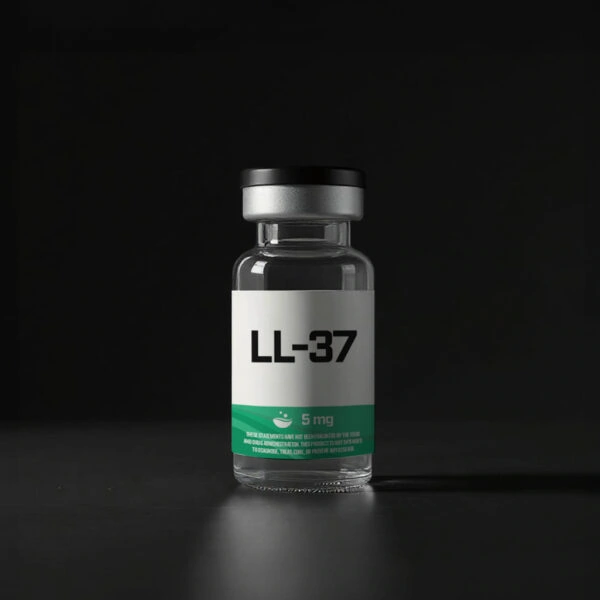
Buy LL-37 Online: The Complete Guide to This Antimicrobial Peptide
Introduction
LL-37 is a unique antimicrobial peptide (AMP) found naturally in the human immune system. It is the only cathelicidin peptide produced by the human body. LL-37 plays a crucial role in innate immunity, defending against bacteria, viruses, fungi, and even biofilms.
Researchers and biohackers are now looking to buy LL-37 online for its powerful infection-fighting properties, wound healing capabilities, and immune-modulating effects.
What Is LL-37?
LL-37 is a 37-amino acid peptide with a characteristic helix structure. Its name comes from:
- L – Leucine (the first amino acid)
- L – Leucine (the 37th amino acid)
- 37 – Total amino acid length
This peptide is produced by immune cells including neutrophils, macrophages, and epithelial cells. It acts as the body’s first line of defense against invading pathogens.
How LL-37 Works
LL-37 fights infection through multiple mechanisms:
Direct Antimicrobial Action
- Disrupts bacterial membranes – Creates pores that destroy pathogens
- Neutralizes endotoxins – Binds to lipopolysaccharide (LPS) from gram-negative bacteria
- Prevents biofilm formation – Stops bacteria from forming protective layers
Immune Modulation
- Recruits immune cells – Attracts neutrophils and monocytes to infection sites
- Regulates cytokine production – Balances inflammatory responses
- Promotes healing – Stimulates angiogenesis (new blood vessel formation)
Anti-Biofilm Activity
LL-37 is one of the few compounds that can penetrate and destroy bacterial biofilms – a major cause of chronic infections and antibiotic resistance.
Key Benefits of LL-37
1. Broad-Spectrum Antimicrobial Activity
LL-37 is effective against:
| Pathogen Type | Examples |
|---|---|
| Gram-positive bacteria | MRSA, Streptococcus, Staphylococcus |
| Gram-negative bacteria | E. coli, Pseudomonas, Salmonella |
| Viruses | Influenza, HIV, Herpes |
| Fungi | Candida albicans |
| Biofilms | Pseudomonas, MRSA biofilms |
2. Chronic Infection Management
LL-37 is particularly useful for stubborn infections that don’t respond to standard antibiotics:
- Lyme disease (persistent forms)
- Chronic sinusitis
- Recurrent urinary tract infections
- Infected wounds and ulcers
3. Wound Healing and Tissue Repair
LL-37 accelerates healing by:
- Stimulating keratinocyte migration
- Promoting new blood vessel formation
- Reducing infection at wound sites
- Minimizing scar tissue formation
4. Immune System Support
LL-37 helps modulate overactive or underactive immune responses:
- Boosts immunity in immunocompromised individuals
- Reduces excessive inflammation in autoimmune conditions
5. Anti-Endotoxin Effects
In sepsis or severe infections, LL-37 neutralizes dangerous endotoxins released by dying bacteria, preventing septic shock.
LL-37 vs. Traditional Antibiotics
| Feature | LL-37 | Traditional Antibiotics |
|---|---|---|
| Resistance development | Very low | High (growing crisis) |
| Biofilm penetration | Yes | Poor |
| Broad-spectrum activity | Yes | Usually narrow |
| Immune modulation | Yes | No |
| Wound healing support | Yes | No |
| Side effects | Minimal | Many (GI, toxicity) |
LL-37 vs. Other Antimicrobial Peptides
| Peptide | Source | Primary Use | Best For |
|---|---|---|---|
| LL-37 | Human | Broad antimicrobial, immune modulation | Chronic infections, biofilms |
| BPC-157 | Gastric juice | Healing, gut health | Tissue repair, ulcers |
| Defensins | Human | Antiviral, antibacterial | Mucosal immunity |
| Melittin | Bee venom | Potent antibacterial | Severe infections (caution needed) |
How to Use LL-37
Standard Dosage Guidelines
| Condition | Typical Dose | Frequency | Cycle Length |
|---|---|---|---|
| Mild infection | 100–250 mcg | Once daily | 7–14 days |
| Moderate infection | 250–500 mcg | Once daily | 14–21 days |
| Chronic infection | 500–1000 mcg | Once daily | 21–30 days |
| Biofilm disruption | 500–1000 mcg | Twice daily | 30–45 days |
Administration Methods
| Method | Bioavailability | Onset | Ease | Recommended |
|---|---|---|---|---|
| Subcutaneous injection | ~95% | 30–60 min | Moderate | ✅ Yes |
| Intramuscular injection | ~99% | 20–40 min | Advanced | ✅ Yes |
| Topical (wound) | Variable | Immediate | Easy | For skin infections |
| Nasal spray | 40–60% | 15–30 min | Very easy | For sinus infections |
| Oral | <5% | N/A | Easy | ❌ Not effective |
Important: LL-37 is degraded in the digestive system. Oral administration is ineffective. Subcutaneous injection is the preferred method for systemic infections.
Sample Protocol for Chronic Infection
- Week 1–2: 500 mcg subcutaneous injection once daily
- Week 3–4: 500 mcg every other day
- Week 5–6: 250 mcg twice weekly
- Assessment: Evaluate symptoms and decide on maintenance or washout
Sample Protocol for Biofilm Disruption
- Phase 1 (weeks 1–2): 500 mcg twice daily + biofilm disruptor (NAC, serrapeptase)
- Phase 2 (weeks 3–4): 500 mcg once daily
- Phase 3 (weeks 5–6): 250 mcg every other day
- Followed by: 2–4 week washout
Potential Side Effects
LL-37 is generally well-tolerated, but some users report:
| Side Effect | Frequency | Severity | Management |
|---|---|---|---|
| Injection site redness | Common | Mild | Rotate injection sites |
| Mild fatigue | Uncommon | Mild | Reduce dose temporarily |
| Herxheimer reaction | Possible | Mild-Moderate | Reduce dose, increase hydration |
| Temporary inflammation | Rare | Mild | Usually resolves in 24–48 hours |
What Is a Herxheimer Reaction?
When LL-37 kills large numbers of bacteria rapidly, released endotoxins can cause temporary flu-like symptoms (fatigue, headache, muscle aches). This is a sign the peptide is working – not an allergic reaction.
To manage: Reduce dose, drink plenty of water, rest, and consider binders like activated charcoal.
Who Should Use LL-37?
LL-37 is ideal for:
- Chronic Lyme disease patients (persistent Borrelia infections)
- MRSA carriers or recurrent staph infections
- Chronic sinusitis sufferers
- Recurrent UTIs unresponsive to antibiotics
- Diabetic ulcers or slow-healing wounds
- Immunocompromised individuals (with doctor supervision)
- Biofilm-related conditions (prostatitis, implant infections)
Who Should Avoid LL-37?
- Pregnant or nursing women (insufficient safety data)
- Individuals with known hypersensitivity to cathelicidins
- Those with active autoimmune flares (consult a specialist first)
- People on immunosuppressive therapy (theoretical interaction)
Where to Buy LL-37 Online
When you decide to buy LL-37 online, quality is absolutely critical. Impure LL-37 can cause unwanted immune reactions.
What to Look For in a Supplier
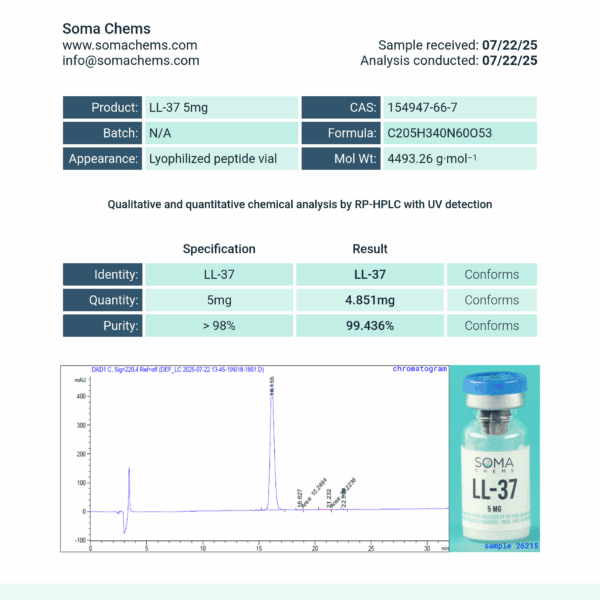
- 🔬 Third-party HPLC testing – Purity should exceed 98% (99%+ ideal)
- 📄 Certificate of Analysis (COA) – Available per batch with recent date
- ❄️ Proper storage – Lyophilized powder shipped with ice packs
- 🧪 Sterile manufacturing – GMP-certified facility
- 💬 Customer support – Responsive and knowledgeable
- 🚚 Discreet shipping – Worldwide delivery with tracking
- ⭐ Verified reviews – Real customer feedback
Red Flags to Avoid
- Prices significantly below market average (LL-37 is expensive to synthesize)
- No COA or expired/outdated COA
- Sells “premixed liquid LL-37” (degrades quickly in solution)
- No physical address or contact information
- Claims of “FDA approval” (not true for research peptides)
- Only accepts cryptocurrency with no alternatives
Reviews
There are no reviews yet.